


TABLE OF CONTENTS
Institutional Lifelong Learning Access Policy
Commitment to Inclusive Access
Scope of Lifelong Learning Activities
Institutional Units Responsible for Implementation
Supporting Institutional Policies on Equality, Diversity and Inclusion
AIUB Non-Discrimination Policy
Institutional Commitment to Equality and Mutual Respect
Equality, Diversity and Inclusion Policy
Support for Students with Disabilities and Underrepresented Groups
Institutional Oversight and Complaint Mechanisms
Implementing the Lifelong Learning Access Policy
Affordability and Learner Guidance
Continuing Education Opportunities for External Learners
SDG 4.3.5: Does your university as a body have a policy that ensures that access to these activities is accessible to all, regardless of ethnicity, religion, disability or gender?
Institutional Lifelong Learning Access Policy
AIUB has established a Lifelong Learning Access Policy as part of its institutional framework, demonstrating its commitment to providing inclusive and accessible learning opportunities throughout people's lives [1]. The policy defines the eligible beneficiaries, the scope of lifelong learning activities, and the university units responsible for coordinating and delivering these opportunities.
Commitment to Inclusive Access
AIUB's policy guarantees access to lifelong learning opportunities without discrimination based on gender, ethnicity, religion, disability, or other similar characteristics [1]. The University's broader lifelong learning framework also explicitly recognizes immigration status as a factor that must not restrict participation [2]. This commitment promotes equal access to educational opportunities and supports the participation of individuals from diverse backgrounds.
Eligible Beneficiaries
AIUB extends its lifelong learning opportunities to four main groups, ensuring that access is available both within and beyond its academic community [1].
| Beneficiary group | Coverage |
| AIUB students | Current undergraduate and graduate students |
| Alumni | AIUB graduates seeking to expand their knowledge and continue their professional development |
| Employees | Faculty members and administrative staff |
| External community | Members of the public without a formal academic or employment relationship with AIUB |
By including the external community, AIUB extends its lifelong learning commitment beyond its institutional boundaries, enabling individuals from the wider public to participate in educational and skills-development activities.
Scope of Lifelong Learning Activities
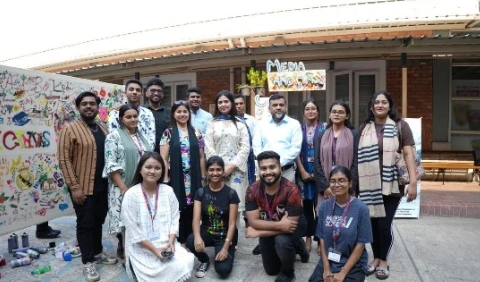
The policy encompasses a range of educational and professional development activities designed to support continuous learning and skills enhancement [1], [2]. These include:
- Workshops and public seminars: Learning activities that facilitate knowledge exchange and access to relevant educational content.
- Continuing education programmes: Courses and learning opportunities coordinated by the Institute of Continuing Education (ICE).
- Community services: Educational initiatives that extend learning opportunities to members of the wider community.
- Career and professional development: Career development courses, professional counselling, job placement services, and skills training for employees and community members.
- Digital learning resources: Public educational materials and recorded sessions made available online.
Institutional Units Responsible for Implementation
AIUB implements its lifelong learning policy through six institutional units, each contributing to the delivery and coordination of learning opportunities within its respective area of responsibility [1]:
1. Institute of Continuing Education (ICE)
2. Office of Human Resources (HR)
3. Centre of Excellence in Teaching and Learning (CETL)
4. Office of Student Affairs (OSA)
5. Office of Sports
6. Office of Placement & Alumni (OPA)
This institutional structure integrates lifelong learning into different areas of university operations, supporting educational development, professional growth, student engagement, and community participation.
Policy Objectives
AIUB's Lifelong Learning Access Policy aims to help individuals acquire and strengthen the knowledge and skills required to pursue their professional careers and personal goals. It promotes continuing education, professional training, and community services as key components of lifelong learning [1]. By extending these opportunities to students, alumni, employees, and members of the external community, AIUB reinforces its commitment to inclusive education and continuous personal and professional development [3].
Supporting Institutional Policies on Equality, Diversity and Inclusion
AIUB reinforces its commitment to inclusive lifelong learning through a broader institutional framework of policies addressing equality, diversity, accessibility, and non-discrimination. These policies promote equitable treatment and help ensure that individuals from different backgrounds can access and participate in the University's educational programmes and activities.
AIUB Non-Discrimination Policy
AIUB's Non-Discrimination Policy is founded on the principles of human dignity, equal opportunity, and academic freedom. It establishes that decisions concerning students and employees must be based on individual merit, without discrimination or harassment [4].
The policy explicitly prohibits discrimination based on the following characteristics [4]:
- Religion
- Race
- Colour
- Age
- Disability
- Nationality
- Marital status
- Sexual orientation, including gender identity
Its provisions cover admission, employment, and access to and participation in the University's programmes and activities [4]. By establishing these protections across academic and institutional activities, AIUB promotes an inclusive environment in which individuals can pursue educational and professional development opportunities regardless of their personal backgrounds.
Institutional Commitment to Equality and Mutual Respect
AIUB's institutional framework incorporates equity, justice, and non-discrimination as fundamental principles governing its responsibilities as both an employer and a higher education institution [5]. It also emphasizes mutual respect between faculty members and students, promoting professional relationships free from harassment and abuse of authority [5].
These principles contribute to an institutional environment that values individual dignity, equal treatment, and respectful interactions across the university community.
Equality, Diversity and Inclusion Policy
AIUB further consolidates its institutional commitment through its Equality, Diversity and Inclusion Policy [6]. Its non-discriminatory admission framework ensures that applicants are considered without discrimination based on [7]:
- Age
- Gender or gender identity
- Sexual orientation
- Race
- Disability
- Colour
- Religion
- National or ethnic background
The University also maintains dedicated admission policies for students with disabilities and individuals from underrepresented groups, reinforcing equal opportunities for qualified applicants [7]. These provisions support broader participation in higher education and promote access for individuals from diverse social and demographic backgrounds.
Support for Students with Disabilities and Underrepresented Groups
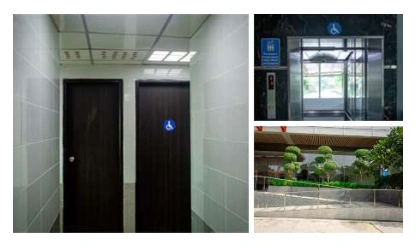
AIUB complements its equality and inclusion policies with specific admission arrangements, financial assistance, and academic support services for students with disabilities and individuals from underrepresented communities [8].
Key initiatives include:
- Accessible admission procedures: Applicants with disabilities are evaluated based on their qualifications, with relevant documentation considered in accordance with Bangladesh's Persons with Disabilities Rights and Protection Act 2013 [8].
- Scholarships for students with disabilities: The Scholarship Committee determines tuition fee waivers according to individual applicants' circumstances [8].
- Financial assistance for underrepresented groups: Scholarship provisions extend to ethnic minorities, low-income students, non-traditional students, third-gender students, and newly settled refugees [8].
- Academic counselling and specialized support: Students with disabilities can access academic counselling and additional support services to facilitate their educational experience [8].
By combining admission provisions, financial assistance, and academic support, AIUB promotes educational accessibility and creates opportunities for individuals who may face additional barriers to participating in higher education.
Institutional Oversight and Complaint Mechanisms
AIUB supports the implementation of its equality and non-discrimination commitments through a dedicated Diversity and Equality Committee. The committee continuously addresses matters related to discrimination and equality within the university community, evaluates progress in diversity and equality, and assesses their impact on institutional stakeholders [9].
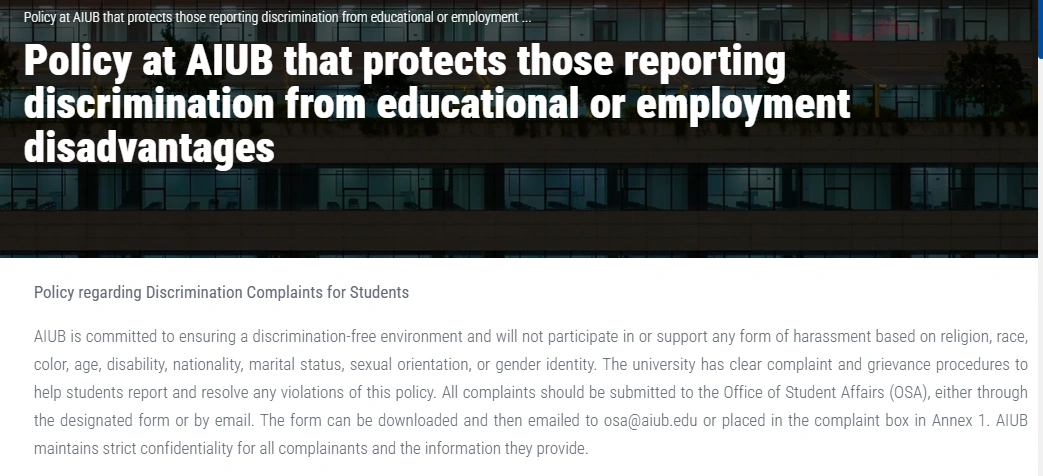
The University also provides formal channels for reporting discrimination. Students can submit complaints to the Office of Student Affairs, while employees can approach the Office of Human Resources. The respective offices are responsible for addressing complaints within their areas of responsibility [4]. AIUB also safeguards the confidentiality of complainants and the information submitted during these procedures [10].
These institutional mechanisms strengthen accountability and reinforce AIUB's commitment to maintaining a respectful, inclusive, and equitable learning and working environment.
Implementing the Lifelong Learning Access Policy
AIUB translates its commitment to accessible lifelong learning into practical measures that address physical, geographical, linguistic, financial, and individual barriers to participation. These arrangements help extend educational opportunities to diverse learners, including individuals from outside the University [2].
Accessibility Measures
AIUB incorporates different accessibility arrangements into its lifelong learning activities to facilitate participation among individuals with diverse needs and circumstances [2].
| Potential barrier | AIUB's accessibility measures |
| Physical accessibility | Accessible venues for learning activities and events |
| Geographical distance | Remote participation options, together with public learning materials and recorded sessions available online |
| Language | Multilingual educational materials |
| Individual accessibility needs | Designated contact points for participants requiring specific accessibility arrangements |
| Financial constraints | Free learning resource packages, sliding-scale fees, no-fee workshop options, and free attendance opportunities within certificate programmes |
These measures provide different ways for individuals to engage with AIUB's educational activities, supporting broader participation regardless of their location, financial circumstances, or accessibility requirements.
Affordability and Learner Guidance
AIUB promotes affordable access to continuing education through the Institute of Continuing Education (ICE), which provides scholarship assistance when needed [2]. The Office of Placement & Alumni (OPA) also supports external learners by helping them identify suitable programmes and access relevant guidance [2].
Additionally, community groups interested in using university facilities can submit requests for institutional consideration. These requests are evaluated based on safety, teaching requirements, and equitable access [2]. Such arrangements facilitate engagement between AIUB and external communities while supporting the responsible use of university resources.
Continuing Education Opportunities for External Learners
The Institute of Continuing Education (ICE) has provided learning opportunities to individuals beyond AIUB's enrolled student population since its establishment in 2007. Initially, the Institute offered specialized information and communication technology (ICT) courses to both AIUB students and learners from outside the University [11].
ICE's mission is to address the lifelong educational and training needs of learners across the local community and the wider region [11]. This commitment positions the Institute as an important mechanism for extending continuing education and professional skills development beyond traditional university enrolment.
Inclusive Educational and Community Learning Initiatives
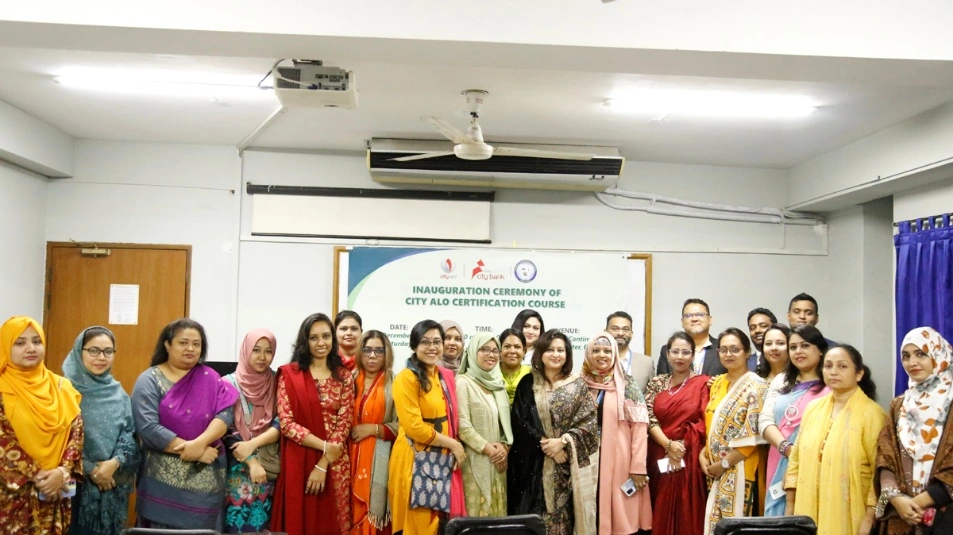
AIUB complements its continuing education activities with initiatives that extend educational engagement to different age groups and communities. These programmes and events provide opportunities for skills development, knowledge exchange, and cultural participation.
- Entrepreneurship education for women. In December 2022, AIUB, in collaboration with City Alo, launched an entrepreneurship certification programme at ICE specifically designed for women [12]. The initiative provides a structured learning opportunity focused on entrepreneurship and supports women's professional and economic development.
- Educational support for disadvantaged children. Through Kathpencil Pathshala, AIUB provides free education and meals to underprivileged children aged 5 to 12 who lack access to traditional schooling [13]. This initiative extends educational opportunities to children from disadvantaged backgrounds and contributes to more inclusive community education.
- Educational outreach to school and college students. AIUB CS Fest 2024 brought together approximately 2,000 school and college students from across Bangladesh [14]. The event provided a platform for young learners to engage with computing-related activities and explore academic and technological interests beyond their regular school curricula.
- Cultural learning and diversity awareness. On 3 March 2024, AIUB organized UNI-CANVAS: Celebrating Unity in Diversity through Art Fusion, an event that used artistic expression to promote unity, cultural appreciation, and a sense of belonging among participants [15]. The initiative highlights the role of creative and cultural activities in broadening learning experiences and encouraging engagement with diverse perspectives.
References
| [1] | American International University-Bangladesh, “Lifelong Learning Access Policy,” [Online]. Available: https://aiub.edu/administration/institutional-policy/lifelong-learning-access-policy. [Accessed 2026]. |
| [2] | American International University-Bangladesh, “Lifelong Learning: Access Policy and Inclusivity,” [Online]. Available: https://aiub.edu/sustainability/sdg4/sdg4-initiative/access-policy-and-inclusivity. [Accessed 2026]. |
| [3] | American International University-Bangladesh, “SDG 4: Quality Education – AIUB SDG Activity Report 2023,” [Online]. Available: https://www.aiub.edu/iqac/sdgs/aiub-sdg-activity-report-2023/sdg4-aiubactivityreportof2023. [Accessed 2026]. |
| [4] | American International University-Bangladesh, “AIUB Non-discrimination Policy,” [Online]. Available: https://aiub.edu/administration/institutional-policy/aiub-non-discrimination-policy. [Accessed 2026]. |
| [5] | American International University-Bangladesh, “Institutional Policy,” [Online]. Available: https://aiub.edu/administration/institutional-policy. [Accessed 2026]. |
| [6] | American International University-Bangladesh, “Equality, Diversity and Inclusion Policy,” [Online]. Available: https://www.aiub.edu/sustainability/equality-diversity-and-inclusion-policy-. [Accessed 2026]. |
| [7] | AIUB's Commitment to Inclusivity, “American International University-Bangladesh,” [Online]. Available: https://www.aiub.edu/iqac/sdgs/aiub-sdg-activity-report-2023/sdg1-aiubactivityreportof2023/sdg-initiative/aiub-s-commitment-to-inclusivity. [Accessed 2026]. |
| [8] | American International University-Bangladesh, “Support Services for Individuals with Disabilities at American International University-Bangladesh (AIUB),” [Online]. Available: https://www.aiub.edu/sustainability/support-services-for-individuals-with-disabilities-at-american-international-university-bangladesh-aiub. [Accessed 2026]. |
| [9] | American International University-Bangladesh, “Diversity and Equality Committee,” [Online]. Available: https://www.aiub.edu/sustainability/diversity-and-equality-committee. [Accessed 2026]. |
| [10] | American International University-Bangladesh, “Policy at AIUB that Protects Those Reporting Discrimination from Educational or Employment Disadvantages,” [Online]. Available: https://aiub.edu/sustainability/sdg5/sdg5-initiative/policy-at-aiub-that-protects-those-reporting-discrimination-from-educational-or-employment-disadvantages. [Accessed 2026]. |
| [11] | AIUB Institute of Continuing Education, “About Us,” [Online]. Available: https://ice.aiub.edu/about-us. [Accessed 2026]. |
| [12] | American International University-Bangladesh, “Certification Program on Women Entrepreneurship inaugurated,” [Online]. Available: https://www.aiub.edu/certification-program-on-women-entrepreneurship-inaugurated. [Accessed 2026]. |
| [13] | American International University-Bangladesh, “Programmes for Services Access,” [Online]. Available: https://aiub.edu/sustainability/sdg1/initiative/programmes-for-services-access. [Accessed 2026]. |
| [14] | Dhaka Tribune, “AIUB CS Fest: Fostering innovation and excellence in technology,” [Online]. Available: https://www.dhakatribune.com/bangladesh/education/345314/aiub-cs-fest-fostering-innovation-and-excellence. [Accessed 2026]. |
| [15] | The Daily Messenger, “AIUB hosted UNI-CANVAS: Celebrating Unity in Diversity through Art Fusion,” [Online]. Available: https://dailymessenger.net/education/news/14684. [Accessed 2026]. |